Tokyo Olympics and Paralympics 2020 turned out to be India’s best-ever performance at the quadrennial sports event in terms of the medals tally. The stellar performance presented brands with the perfect opportunity for leveraging the athlete’s success and use it to increase their visibility and traction by unauthorised usage of the image rights. This form of ‘moment marketing’ by brands have not been taken well by the athletes involved and have resorted to legal actions to ensure that there is no future violation of an individual’s image rights. This article will discuss the various issues involved in such cases.
What are image rights?
Image rights as the name suggest is related to its expression “image” which is associated with the “persona” and “brand” of an individual. These rights sometimes also referred to as celebrity rights are rights associated with the personality of an individual. They can be defined as an individual’s right to control the commercial use of his or her identity. The public image of a celebrity is of immense value and involves a tremendous amount of money. Thus, it becomes important for such a person to protect his right so that nobody else exploits it or acquires unauthorized gains from it. The right to publicity does not constitute a statutory right in India. Indian courts have recognized the right to publicity and laid down essential components for its infringement. There is no specific legislation in India to protect image or personality rights. Image or personality rights recognize the commercial value of the picture representation of a prominent person, performer or sportsperson, and protect their proprietary interest in the profitability of their public reputation or persona. In India, while no specific law has been created in this respect, Indian courts have acknowledged and enforced this right in various cases.
In DM Entertainment v Baby Gift House and Others, the Delhi High Court held that the defendants were liable for false endorsements and for passing off, violating popular Indian singer Daler Mehndi’s right to publicity by having toys that were identical to his likeness.

In Titan Industries v M/S Ramkumar Jewellers, the court observed: “When the identity of a famous personality is used in advertising without their permission, the complaint is not that no one should not commercialize their identity, but that the right to control when, where and how their identity is used should vest with the famous personality. The right to control the commercial use of human identity is the right to publicity.”
A past example: In the case of Muhammad Ali Enterprises LLC v. Fox Broadcasting Co, the defendants, a broadcasting company, had released a ‘tribute’ to the legendary boxer, Muhammad Ali, in the video promotion of the 2017 Super Bowl. The defendants claimed that there was no infringement of any right since the purpose of the video featuring Ali was non-commercial in nature. However, the parties settled out of Court in a US$ 30 million deal, and Fox admitted that the video was commercial in nature as it featured the logos of Super Bowl and Fox.
Olympics regulations on the commercialization of Image Rights
In the early 1990s, the IOC enacted Rule 40 of the Olympic Charter, which was an agreement between the athletes and the IOC. Rule 40 established a “blackout” period immediately prior to and during the Olympic Games. Under Rule 40, Olympic athletes were subject to disciplinary action, including potential stripping of medals, if any non-Olympic sponsor mentioned the athlete’s name or showed their image during the blackout period. According to the IOC, the Rule was meant to protect official Olympic sponsors, as well as the athletes, from “ambush marketing.” An exception to Rule 40.3 was introduced in 2015, when the IOC allowed marketing campaigns during the blackout period, provided ‘only’ that approval be granted by the IOC or the relevant National Olympic Committee no less than about six months prior to the start of the Games. However, ahead of the Tokyo 2020 Olympics, the International Olympic Committee session held on 26th June 2019 introduced a sweeping relaxation to By-Law 3 of Rule 40 of the Olympic Charter. It stated that the sponsors of athletes and other participants to the Olympic Games will have the possibility to use the image rights of their testimonials for advertising purposes during the Olympic Games in accordance with the principles determined by the IOC Executive Board.
The PV Sindhu Issue
PV Sindhu’s successful Olympics venture resulted in a spike of advertisements and social media congratulating the Indian shuttler on her success. However, most of the brands behind these advertisements and posts had neither taken consent from Sindhu nor her management agency Baseline Venture for using her image rights. Moreover, these advertisements and posts were seemed to falsely portray an association with her without actual affiliation or prior permission. This practice is known as moment marketing. Moment marketing refers to tactics wherein there is a presumed affiliation with a brand when there is no actual affiliation or endorsement. These tactics could fall under the purview of misleading advertising as referring to the athletes and using their images without their permission is a potential violation of the Advertising Standards Council of India (ASCI) Code, as it could mislead consumers into believing that the athletes have endorsed the products. Chapter I, Rule 1.3 states, “Advertisements shall not, without permission from the person, firm or institution under reference, contain any reference to such person, firm or institution which confers an unjustified advantage on the product advertised or tends to bring the person, firm or institution into ridicule or disrepute. If and when required to do so by The Advertising Standards Council of India, the advertiser and the advertising agency shall produce explicit permission from the person, firm or institution to which reference is made in the advertisement.” Therefore, as per the Code, explicit permission from the person should be sought when references are being made.

Moment Marketing and Ambush Marketing
Ambush Marketing refers to the practice of “ambushing” an event to get more traction and exposure. It is a type of ‘parasitic’ marketing in which one brand, tries to establish an association with an event or an individual without paying the requisite fee. In most jurisdictions, separate legislation for preventing ambush marketing is absent. In that scenario, most jurisdictions usually invoke trademark and copyright protection to restrain the competing brand from riding their coat-tails and gaining from their enormous investments. Ambush marketing is mostly in the context of sponsorships, and since a major part of the revenue for sporting events comes from sponsorships, it is important to prevent ambush marketing as it causes losses to genuine sponsors.
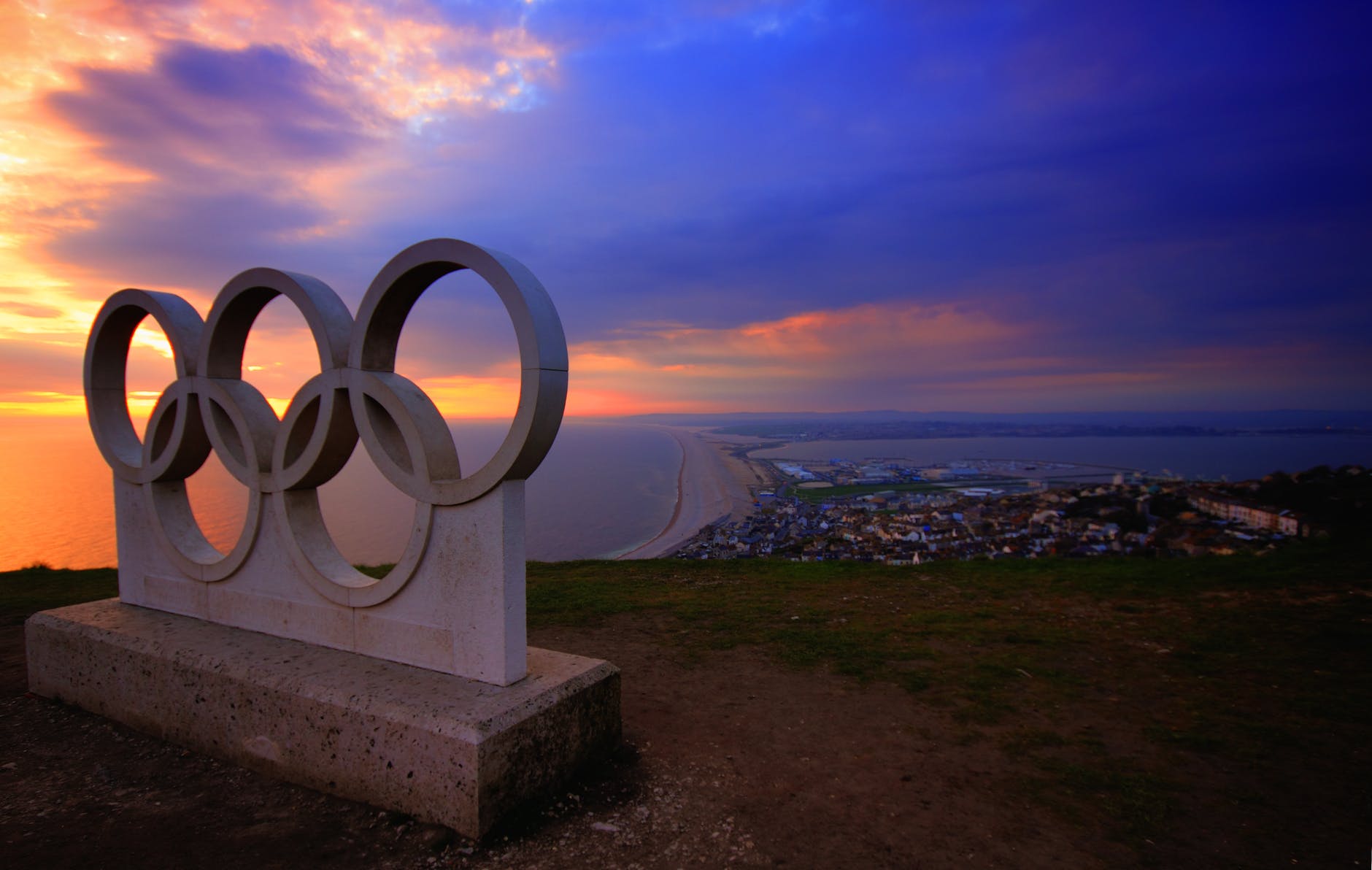
According to the Brand Protection Guidelines of Tokyo 2020 Olympics, examples of ambush marketing include symbols and images such as unauthorized use of the Olympic emblem and symbol; use of terms that bring to mind the Games; use of Olympic terms and torch images; graphics that resemble the Olympic symbol; and unauthorised PR publications. Further, it is clearly stated that no company or organisation, except for the Tokyo 2020 partners, are allowed to engage in marketing activities and public relations activities using the names and images of the Olympic or Paralympic Games, even if they are/were under a contract with the Tokyo Organising Committee of the Olympic and Paralympic Games or any other organisations related to the Olympic or Paralympic Games.
Ambush Marketing and Olympics
The Organizing Committee for the Olympics has serious considerations for ambush marketing. In the Brand Protection Guidelines for Tokyo 2020 Olympics, the organizers have discussed the problems associated with ambush marketing in quite a lot of detail. Apart from this, they have also mentioned and referred to several ‘problematic scenarios’ which would count as ambush marketing. Basically, the Olympic Organizing Committee is required to take special measures for the prevention of ambush marketing, as it is not specifically classified as an offence. Brands tend to be really creative and cheeky with their marketing, and therefore they may get away with not only causing loss to the genuine sponsors but also unethically gaining from such marketing. Moment Marketing is technically very similar to Ambush Marketing as it includes hijacking a sportsperson’s achievement for business gain. A specific sportsperson and his/her achievements to gain commercial mileage without prior permission or getting into a contract with that individual would not only be unethical but also a violation of legal rights.
Guidelines for Congratulatory Advertising
The IOC in 2019 published in an amended version of Rule 40 of the Olympic Charter defined Congratulatory Advertising as “supporting messages encouraging, commiserating or otherwise supporting an athlete or a national Olympic team in connection with their participation at Tokyo 2020, and…congratulatory messages praising the athlete or a national Olympic team for their achievement at Tokyo 2020.” This principle restricts congratulatory advertising to Olympic Partners during the blackout period. However, it makes allowances for non-Olympic partners to support their contracted athletes before and after the blackout period, as long as no “Olympic Properties” are included in the advertising.
Unfortunately, most the parties issued the legal notice by Baseline Ventures have used the image of PV Sindhu on the podium, or have taken a still from the Olympic matches which are included in “Olympic Properties”. The Olympic Charter includes in its definition of “Olympic Properties” the capture of still and moving images of the Olympic Games for use by the media.
India and the Olympic Charter
The Indian Olympics Association prior to Tokyo Olympics 2020, for the first time, asserted its rights over the digital, video and image rights of qualified athletes of the country. IOA President Narinder Batra’s statement to the athletes, “This is to inform you that for the Olympics, all-digital, video and image rights of qualified athletes are with the IOA and IOC has the authority to utilise the same for all its sponsors etc. It is not as if India has never had to deal with laws similar to Rule 40 before. During major cricketing tournaments such as the ICC Cricket World Cup 2016, the ICC too imposed similar restrictions on Indian cricketers. During the blackout period for the World Cup, cricketers were allowed to appear in advertisements or commercial activity only in cricket whites or generic unbranded clothing. They were not allowed to appear in the national colours of their team. Their sponsors were not allowed to make any direct or implied association with the event or use any of the ICC marks or logos. Cricketers were also not allowed to display any branding or mark of any third party apart from an approved manufacturer or team sponsor while playing.
Legal remedies in such issues
Indian sports stars might find it difficult to get recourse under the Trade Marks Act against ‘moment marketing’ violations, that is when brands insert celebrities into trending moments that are already generating a lot of conversations. The reason is that sporting celebrities in India, unlike global players, do not patent or register their personal or unique nuances which would allow them to gain relief under the act. However, image rights if broken down correctly into separate Intellectual property can provide some legal remedy to the rights holders as under Section 38 and Section 57 of the Copyright Act 1957 of the Copyright Act, 1957, the law protects the moral rights of the individual thereby providing some protection of the personality of a celebrity. A claim can be brought to show that a wrongdoer has not only infringed copyright but also violated one’s personality and publicity right. Under the trademark law, passing off action can be brought against the loss of goodwill or damage to the reputation of an individual caused by misrepresentation by a third party(M. Entertainment v. Baby Gift Horse CS(OS) No. 893/2002). One can also refer to the case of TITAN Industries vs. M/s Ramkumar Jewellers 2012 (50) PTC 486 (Del), in which it was observed that “No one was free to trade on another’s name or appearance and claim immunity”. Therefore, even though there’s no statute in India regarding Personality rights, the intention of the Court has been to recognize and protect these rights.
Conclusion Sports’ is a very lucrative market in the current times which makes a professional athlete’s right of publicity to be secured as it has come from the hard work they have done over the years. The Indian sports market is also expanding at a very fast rate, so is making the professional players more vulnerable to exploitation. Over the years, many celebrities have been involved in cases related to the unauthorized use of their image rights. It is important for lawmakers to sanction a distinct celebrity rights regulation that would safeguard against the exploitation of image rights and give them protection and if such legislation is enacted it would also be beneficial for advertising firms to guard themselves by acquiring legally documented approvals from such luminaries before using their public image, name, etc. However, on account of the lack of such regulations and authorizations, usually, it is would be wise to include legal disclaimers to reduce accountability in the case if there are any clashes.
 LAWBEES