
- INTRODUCTION
The land is the most significant aspect of public welfare and is thus governed by the most anxious law in India. The primary proprietor of land is the king or in a contemporary sense the chosen Government in power. Land laws in India focus on various significant ideas among which the concept of eminent domain is measured to be an important one. The Doctrine of Eminent Domain, a concept taken from America, allows the sovereign to capture any private land and make it a public land that may benefit the public at large. As the sports industry has grown into a multi-billion dollar enterprise, cities have increasingly faced the decision of whether to fund expensive stadium projects to attract or keep franchises. These projects commonly include using public funds and the government’s eminent domain power under the Public-Use Clause. To divert public money for these uses might be legally and economically dubious at any time, but to do so when public schools, health and transportation are perennially deprived of adequate resources seems especially wrong-headed. In particular, the use of the eminent domain power for these purposes is, violative of the “public use” mandate of the Constitution. While no court has held that a municipality can acquire or operate a professional sports team, the broad definition and the limited review applied to legislative determinations of public use’ indicate that the limitation is broad enough to encompass such a taking. Recreation has been deemed a legitimate public purpose which justified acquisitions of land to be used for sports stadiums, community parks, and municipal halls.
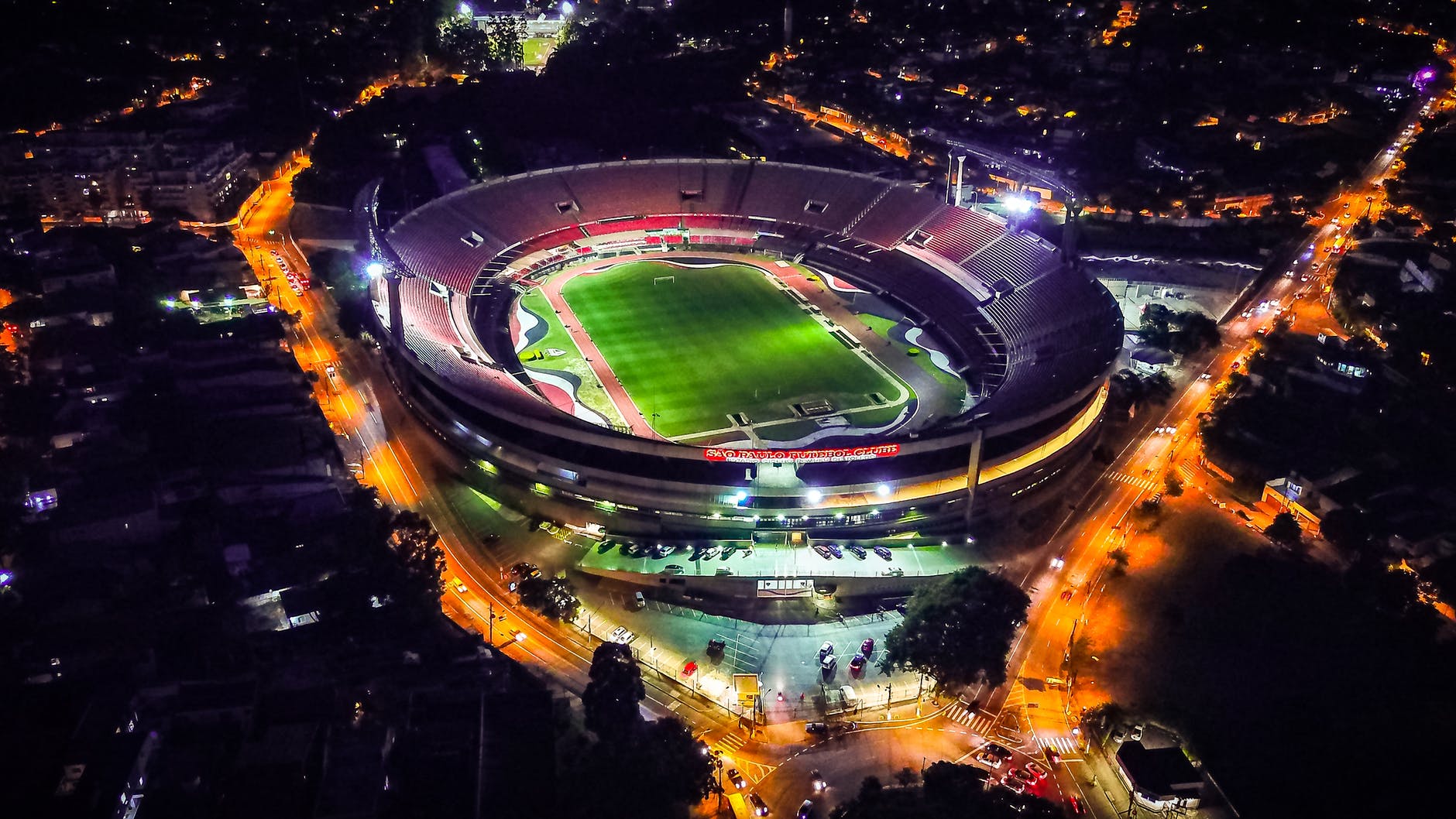
Eminent domain is a legal strategy that enables a federal or local government to seize private property for public use. The seizing expert must pay honest incentives for the property seized. The doctrine of Eminent Domain, in its general implication, implies the incomparable intensity of the king or the government under which property of any individual can be assumed control in light of a legitimate concern for the overall population. Eminent Domain is the intensity of the sovereign to secure the property of a person for public use without the need of his assent. This power depends on the discretion of the State. Eminent Domain power is viewed as a characteristic intensity of the State to take private property for public purposes. This power relies upon the better space of the State over all the property inside its limits. A coincidental constraint of this power is that the property will not be taken without just remuneration. The articulation “eminent domain” implies changeless (prominent) territory (area) of the state on the property. The intensity of the State to take private property for a public purpose and subsequent right of the proprietor to repay presently rise up out of the constitution of India. In passage 42 List III of the Seventh Schedule under the Indian Constitution, both Union and States governments are engaged to sanction laws identifying with obtaining of property. The utilization of eminent domain control for land acquisition is additionally defended when people in general reason being referred to can be served by just a particular real estate parcel, which has no substitute. Eminent Domain or expropriation is the inherent right of the state to condemn private property to public use upon payment of just compensation.
2. EMINENT DOMAIN AND LAND FOR THE DEVELOPMENT OF SPORTS STADIUMS
Assembling sites for huge sports stadiums in urban areas or their built-up suburbs often requires the acquisition of land through eminent domain. Sports stadiums were not always viewed as a subject for government promotion and sponsorship. Although the power of eminent domain seems well-suited to condemning land for new stadiums, it is poorly suited to be stated as something done for the welfare of the general population. Eminent domain has long been exploited as a means of taking private property for sports arenas, but it is only now emerging as a public issue. Private enterprises that own sports teams are looking for prime real estate in order to relocate and build larger, more sophisticated stadiums. This real estate is centrally located in populated cities and conveniently accessible by public transportation. It is occupied by millions of people who reside in houses and apartments or own and operate stores, restaurants, and other businesses—people who are part of a community and have no intention of moving. Yet, when private corporations persuade local governments to exercise their powers of eminent domain, unsuspecting residents are forcibly bought out of their property to make way for retractable-rooftop stadiums with luxury box seats and large parking lots. This raises the question of whether the Public use benefit is present or not when it comes to condemning land for developing sports infrastructure. As the public use benefit is seemingly fading from the application of eminent domain, jurisdictions throughout the nation have applied their own interpretation as to what constitutes a public purpose. Since a city’s condemnation of a sports franchise serves the purpose of encouraging recreational and spectator activity, promoting civic pride and stimulating the local economy, it probably would satisfy the public use requirement. The Indian public has a strong interest in professional sports franchises. In addition to providing entertainment, sports franchises provide community members with a source of local pride. Communities in which professional sports teams play have abundant exposure to substantial revenues and employment opportunities from the operation of such teams and sports leagues. Prompted by the local public interest in a particular sports team, municipalities, through municipal stadium authorities, authorities can generally authorize capital construction bonds to finance the construction of a stadium to host a sports league.
3. “PUBLIC USE” DEFINED AND EXPANDED IN THE STADIUM CONTEXT
“Public use” is defined as “the public’s beneficial right to use property or facilities subject to condemnation.”[i] Property rights advocates would argue that professional sports leagues are privately owned by individuals and do not provide a public use that is rationally related to an economic development plan.[ii] Additionally, landowners who value their homes as their “castle” would argue that professional teams and the league management are essentially producing a profit for themselves rather than providing a benefit to the public. The team’s owner would counter that the stadium is made available to the public. In contrast, proponents for sports stadiums as a public use would argue that professional sports stadiums are a commodity that not only generates revenue for the state and individual cities but also creates common bonds among the community that unite citizens behind supporting the home team. Generally, sports stadiums create an environment for fans to come together. Another public benefit of the new stadiums is increased employment opportunities. Sports stadium projects have the ability to create new construction jobs during a stadium’s building phase.[iii] When the stadium construction is complete, stadium projects create new jobs in ticket sales, parking, concessions, and other game-day staff positions. Then, the money that parking attendants, restaurant workers, and stadium workers spend from their income will circulate throughout the local economy. This example is what economists call the multiplier effect, which means that “one rupee of spending (by consumers, businesses, or government) creates more than one rupee in economic activity.”

There are two basic views of public use: the broad, “advantage-to-the-public” view, and the narrow, “use-by-the-public” view.[iv] Because legislation does not define “public use,” the lack of constraint, combined with broad case interpretation, has encouraged city and state officials to err on the side of private developers. The local rules of eminent domain facilitate this process in that they incorporate “sports facilities” into their definition of what is considered public use. Eminent domain is no longer a concise doctrine, but rather a broad guideline giving power to state and local governments to dictate where it will be used and how it will benefit the public.
4. SPORTS & FACTORS TO BE CONSIDERED TO DETERMINE EMINENT DOMAIN
Market demand
Post Olympics 20202, Sports is gradually becoming a way of life in India, beyond cricket as well, which in turn increases demands for better sporting infrastructure. So this factor would be fulfilled to determine eminent domain.
Proximity to areas already developed in a compatible manner with the intended use
The system of Compact Sports arena is absent in India due to which players, as well as the audience, need to travel to far off stadiums when it comes to domestic multi-sports tournaments. If Land near a pre-existing sports infrastructure can be redeveloped into a sports city, then the eminent domain factor of reducing proximity would be fulfilled.
Economic development in the area
Developing local markets through sport by means of hosting local sports events, producing low-cost and affordable sporting goods and through athletes’ remittances and Building skills for employment through sport would assist in the economic development of the area, which fulfils the economic development in the area-factor.
Specific plans of businesses and individuals
The sports sector contributes to the economy in many ways: by supporting employment and adding to the economic output due to commercial activities, by contributing towards increasing the expected life span of the population, by facilitating better lifestyles that can also lead to increased income levels, by helping to avoid healthcare costs, as well as a number of other social benefits.
Actions already taken to develop land Scarcity of land for that use
Many of India’s ambitious sports infrastructures have been stalled due to a lack of space and funds. India has consistently failed to foster any sport other than cricket. Even a large amount of public and private investment in sports has failed to produce substantial results, due to the absence of proper land. There is a shortage of land for the construction of sports infrastructure in urban areas. In addition, not much initiative has been taken to promote sports through specific infrastructure development by the provision of land parcels outside of urban areas.[v]
5. CONCLUSION
Sports team owners have for a long time lobbied for eminent domain as a way to acquire property in order to finance a multimillion-dollar facility for their teams to play in, without having to dig deep into their own pockets. Eminent domain is a crucial power that the government possesses, and without it, redevelopment efforts in truly poverty-stricken cities could possibly strike a deadly blow to urban revival in these places. However, without a definite rule of what constitutes public use and an acknowledgement that public use is not the same thing as public purpose, private property owners are left in a dangerous position of never knowing when their homes or businesses may potentially be taken away from them. The exploitation of eminent domain to take private land for sports arenas is a public issue that must be addressed. Although the growth of public use may be attributed to the rationale that the concept must expand to meet the complex and ever-changing needs of society, it should not be applied in a manner that violates the rights of individuals. State courts should recognize their duty to enforce the public use requirement of their own state constitutions. However, if they continue to give great deference to legislative bodies, they should be more liberal in their awards of compensation where the subject of condemnation is less traditional. A broad range of evidence, therefore, should be allowed at trial to establish just compensation for the taking of a sports franchise. It is crucial that the public be aware of this practice so that it can react before a developer sets his sights on a community for a future stadium.
[i] Bryan A Garner & Henry Campbell Black, Black’s law dictionary (8) (2005)
[ii] Colleges raised US$1.2 billion in donations for sports University World News, https://www.universityworldnews.com/post.php?story=20160130064647730 (last visited Oct 1, 2021)
[iii] The Economics of Subsidizing Sports Stadiums PAGE ONE ECONOMICS, https://research.stlouisfed.org/publications/page1-econ/2017-05-01/the-economics-of-subsidizing-sports-stadiums/ (last visited Oct 1, 2021)
[iv] The Public Use Requirement in Eminent Domain, 57 OR. L. REV. 203, 205-06 (1978)
[v] Sports infrastructure: Transforming the Indian sports ecosystem (ASSOCHAM-PwC) (2019), https://www.pwc.in/assets/pdfs/industries/entertainment-and-media/sports-infrastructure.pdf (last visited Oct 1, 2021)
 LAWBEES